The Execution of Otto Moll: The Final Moments of the Auschwitz Officer Convicted of Crimes Against Humanity _usww632111

Educational purpose only. This post records historical events connected to World War II and firmly condemns the Nazi regime, war crimes, racism, antisemitism, and every form of totalitarian ideology. It does not glorify violence, hatred, or persecution.
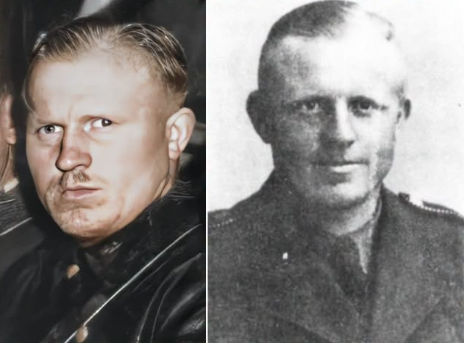
Otto Moll: The Auschwitz Officer Executed for Crimes Committed During the Holocaust in 1946
Otto Moll was an SS officer associated with Auschwitz-Birkenau, one of the central killing sites of the Holocaust. His name appears in survivor testimony, postwar tribunal records, and historical studies of the Nazi concentration camp system. These sources describe him as a camp official who held positions of authority in areas connected with the crematoria, forced labor, and the handling of victims during periods of mass deportation.
Before joining the SS, Moll had trained as a gardener. During the 1930s, he entered the SS and later became part of the concentration camp system, where obedience to criminal orders, ideological extremism, and disregard for human life were rewarded by the Nazi state. His career reflects how ordinary civilian backgrounds could be transformed into roles within a system built on oppression, racial persecution, and organized murder.
1. Auschwitz-Birkenau and the Crematoria
At Auschwitz-Birkenau, Moll served in positions linked to the crematoria and later to outdoor burning areas used when the camp’s killing apparatus was overwhelmed. Survivors and former prisoners described him as one of the feared SS personnel in the camp. Testimony presented after the war connected him with selections, executions, abuse of prisoners, and the supervision of forced labor under deadly conditions.
During the deportation of Hungarian Jews in 1944, Auschwitz-Birkenau received enormous numbers of victims in a short period. Historical accounts state that the crematoria could not process the bodies quickly enough, and outdoor pits were used near the crematoria. Prisoners forced into Sonderkommando units later testified that Moll supervised these operations and used threats and violence against those who resisted, weakened, or collapsed from exhaustion.
2. Allegations of Extreme Cruelty
Survivor testimonies and trial records contain serious allegations about Moll’s conduct. Witnesses accused him of repeated brutality toward prisoners, including women and children. Some accounts included claims of especially cruel acts near the burning pits. Because individual memories, trauma, and courtroom testimony can vary in detail, historians usually treat such accounts with careful attention to context, while also recognizing the consistent pattern of violence described by multiple survivors.
What remains clear is that Moll’s behavior was not described as an isolated incident. The evidence presented after the war portrayed a repeated pattern of abuse, intimidation, and participation in crimes against prisoners. His actions formed part of the broader Nazi system that dehumanized victims and turned mass violence into an administrative routine.
3. Later Camp Service and Death Marches
After serving at Auschwitz, Moll was assigned to other camps and subcamps, including Kaufering, which was part of the Dachau camp system. In the final months of the Second World War, as Nazi Germany collapsed, prisoners were forced on evacuation marches under brutal conditions. These marches became known as death marches because many prisoners died from exhaustion, starvation, exposure, or shootings by guards.
Moll was later accused of crimes connected with these evacuations. After the war, he was captured by American forces and brought before a United States military tribunal. The proceedings addressed crimes committed during the final phase of the camp system and formed part of the wider Allied effort to hold Nazi perpetrators accountable.
4. Trial and Execution
Otto Moll was convicted by a U.S. military tribunal and sentenced to death. He was executed by hanging at Landsberg Prison in 1946.
5. A Warning from History
The case of Otto Moll is a warning about how institutions can normalize cruelty when law, morality, and human dignity are destroyed by ideology. His story illustrates the danger of unchecked power, the consequences of dehumanizing targeted groups, and the responsibility of societies to defend historical truth, human rights, and democratic values.
Primary sources and references:
U.S. Military Tribunal records – Otto Moll trial, 1946
Survivor testimonies – Auschwitz-Birkenau State Museum
Sonderkommando accounts
Historical studies of Auschwitz and the Nazi camp system
Wikipedia – Otto Moll / Auschwitz concentration camp