Labour Tensions Grow as Burnham Considers Shabana Mahmood for Chancellor
The incoming Prime Minister is facing pressure from within Labour as MPs question whether the Home Secretary has the economic experience needed to lead the Treasury.
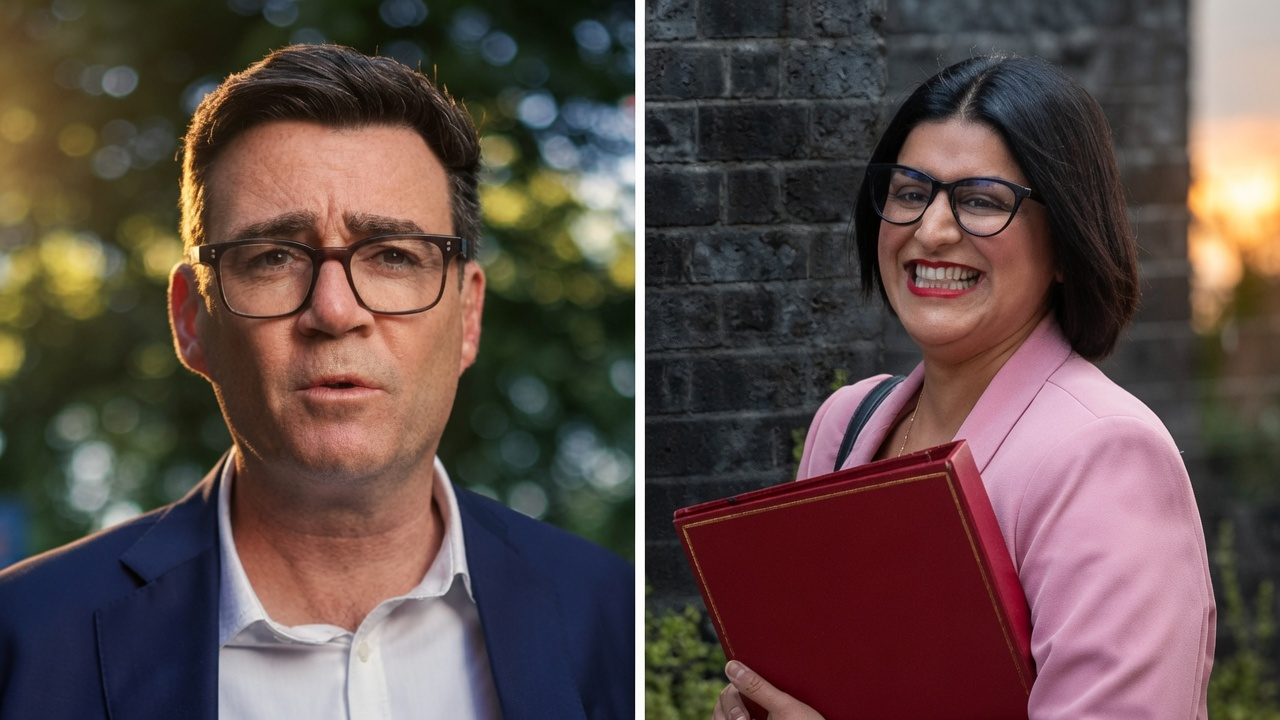
Andy Burnham is facing an early test of party unity amid reports that Shabana Mahmood is being considered for Chancellor of the Exchequer ahead of the unveiling of his first Cabinet.
Mr Burnham, who is expected to enter Downing Street on Monday, has not formally confirmed his senior ministerial appointments. However, Ms Mahmood has emerged as a leading candidate to replace Rachel Reeves at Number 11, placing her ahead of other prominent Labour figures including Ed Miliband and Yvette Cooper.
The prospect of Ms Mahmood taking control of the Treasury has already caused unease among some Labour MPs, particularly those on the party’s left. Critics have questioned whether the Home Secretary’s political record provides enough evidence of her economic priorities or her ability to manage one of the most powerful departments in Whitehall.
Labour backbencher Rachael Maskell publicly argued that Ed Miliband would be a more suitable choice for the role. Speaking to Times Radio, she praised his ministerial experience and suggested that his work as Energy Secretary had demonstrated the leadership required to oversee the Treasury.
Ms Maskell also argued that economic policy could no longer be separated from Britain’s environmental commitments. Future governments, she said, would face growing financial pressures associated with climate change, energy security and the transition towards a lower-carbon economy.
Her intervention highlights a wider disagreement within Labour over what the Treasury should become under Mr Burnham. For some MPs, the department must move beyond its traditional focus on spending controls and play a more active role in regional investment, industrial development and climate policy.
Mr Miliband’s supporters believe his previous experience in government, including his work alongside Gordon Brown, gives him a deeper understanding of economic decision-making. They also see him as someone capable of challenging the long-standing centralisation of power within the Treasury.
Criticism of Ms Mahmood has also reportedly emerged from figures close to Mr Burnham. One senior ally questioned her economic background and raised concerns about whether she would be able to build cooperation across government departments.
Another Labour MP described the possible appointment as difficult to understand, arguing that Ms Mahmood has rarely made major public speeches or interventions on taxation, public spending or economic growth.
Such criticism does not necessarily mean that she would struggle as Chancellor. Many senior ministers have moved successfully into departments outside their previous areas of expertise. The Treasury is also supported by experienced civil servants, economic advisers and officials from the Office for Budget Responsibility.
Nevertheless, political appointments are judged partly on the message they send. At a time when households remain anxious about living costs, public services and financial security, the choice of Chancellor will be viewed as an early indication of the direction Mr Burnham intends to take.
Supporters of Ms Mahmood point to her record at the Home Office and describe her as a determined minister who is prepared to make difficult decisions. They argue that her willingness to pursue policies she considers necessary, even when they are politically uncomfortable, could prove valuable at the Treasury.
Her backers may also believe that she would reassure voters and businesses concerned about a sudden shift towards a more radical economic programme. While Mr Burnham has spoken about reducing regional inequality and changing the way government operates, he will also need to demonstrate that his administration can maintain financial stability.
That balance will not be easy.
The Treasury faces competing demands for greater investment in housing, transport, energy and public services, while the Government must also manage borrowing, taxation and market confidence. Whoever becomes Chancellor will have to explain not only what Labour wants to achieve, but how the country will pay for it.
This is why the argument over Ms Mahmood and Mr Miliband is about more than personalities. It reflects a deeper struggle over Labour’s economic identity.
One side wants a Chancellor closely associated with industrial strategy, public investment and climate action. The other appears to favour a figure seen as pragmatic, disciplined and less closely tied to the party’s traditional left.
For ordinary families, however, internal Labour labels may matter far less than practical results. People facing higher housing costs, pressure on household budgets and uncertainty about public services will expect the next Chancellor to offer credible answers rather than another round of political positioning.
There is also a human dimension to the debate. A new Prime Minister normally hopes to begin with a sense of momentum and unity. Instead, Mr Burnham is discovering that every major appointment creates winners, disappointed supporters and questions about the kind of government he intends to lead.
Selecting Ms Mahmood could demonstrate independence and a willingness to make unexpected choices. But it would also place immediate pressure on her to establish economic authority, communicate a clear vision and prove that concerns about her experience are misplaced.
Choosing Mr Miliband, by contrast, could satisfy Labour’s left and strengthen the connection between economic and environmental policy. Yet it might also increase fears among some businesses and fiscal conservatives that the new Government intends to pursue a more interventionist approach.
Mr Burnham has promised that his Cabinet will represent different parts of the Labour Party. The Treasury appointment will show how seriously that commitment is being interpreted—and which political instincts will ultimately shape his premiership.
Until the Cabinet is officially announced, speculation will continue. But the intensity of the argument has already revealed something important: Labour’s internal debate over economic policy did not end with a change of leader.
It may only just be beginning.