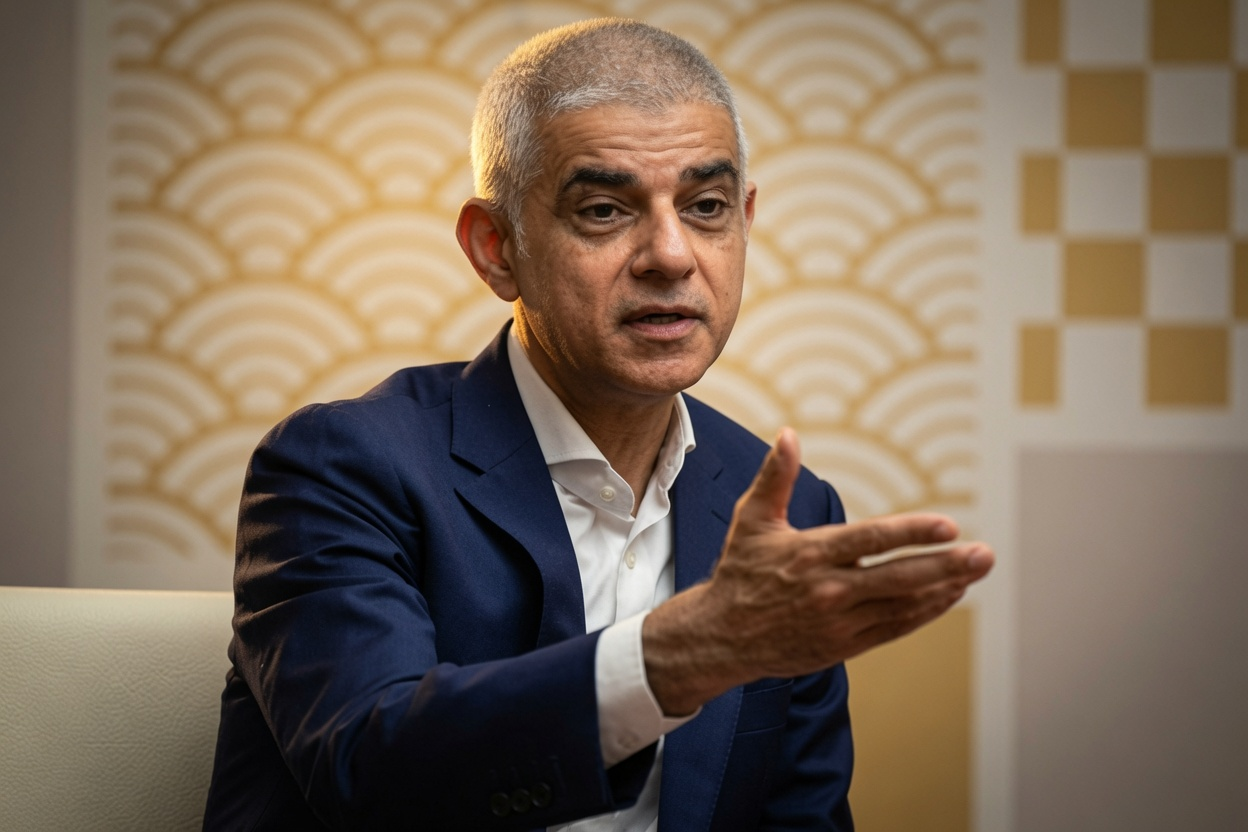
Sadiq Khan Faces Hypocrisy Row After Accepting House of Lords Peerage
Sir Sadiq Khan has become embroiled in a political row after accepting a life peerage, years after declaring that he would vote to abolish the House of Lords.
The Mayor of London was named among 26 new peers in a list confirmed by the Government on 16 July. The appointments were made by outgoing Prime Minister Sir Keir Starmer shortly before he was due to hand power to his successor.
Sir Sadiq is expected to continue serving as London Mayor while taking a seat in Parliament’s unelected upper chamber, where peers scrutinise legislation, propose amendments and hold ministers to account. No government role has been announced for him.
However, his elevation has revived comments he made during a House of Commons debate in 2012.
Speaking as the Labour MP for Tooting, Sir Sadiq said he had previously voted to abolish the House of Lords and would do so again if given the opportunity. He argued that Britain could operate with a single parliamentary chamber supported by stronger pre-legislative scrutiny and outside expertise.
Those remarks have now provided his political opponents with an obvious line of attack: how can a politician who once opposed the institution justify accepting a permanent place within it?
Reform UK Questions Khan’s Principles
Laila Cunningham, Reform UK’s London mayoral candidate, accused Sir Sadiq of abandoning his principles in exchange for another political title.
She said: “Sadiq Khan wanted the House of Lords abolished. Now he’ll happily take a seat there as Lord Khan. What changed? Your principles, or your title?
“Isn’t being Mayor of London enough of a title for you? And will you now resign?”
The question of resignation is politically powerful, but Sir Sadiq is not legally required to leave City Hall simply because he has received a peerage. Other politicians have combined regional leadership responsibilities with membership of the House of Lords.
Nevertheless, the controversy is not simply about whether the two positions can technically be held at the same time. It is about trust.
Voters are often willing to accept that politicians change their minds. Circumstances evolve, institutions change and experience can produce a more complicated view than the one expressed years earlier.
What frustrates the public is the suspicion that a principle has changed only when doing so becomes personally advantageous. For Sir Sadiq, that perception may prove more damaging than the constitutional argument itself.
Conservatives Attack Khan’s Record at City Hall
The Conservatives also condemned the appointment, using the peerage announcement to launch a wider attack on Sir Sadiq’s record as Mayor of London.
Gareth Bacon, the Shadow Minister for London, described him as a “disastrous” mayor and claimed that his administration had failed Londoners on housing, taxation and transport.
He criticised the decline in housing delivery, increases in the mayoral share of council tax, the expansion of the Ultra Low Emission Zone and repeated rises in the Congestion Charge.
Mr Bacon also pointed to disruption caused by strikes on the Transport for London network, arguing that giving Sir Sadiq a seat in the Lords would feel like a reward for failure.
He said the appointment would be “a slap in the face” to Londoners and accused Labour of rewarding political allies rather than achievement.
These are serious allegations, but they also reflect the intensely partisan battle over Sir Sadiq’s legacy. Few politicians in modern London provoke such sharply divided reactions.
To his critics, he represents higher taxes, restrictive motoring policies and an administration that has not built enough homes. To his supporters, he is a three-time election winner who has defended London’s diversity, improved air quality and invested in public transport and council housing.
The truth is unlikely to fit comfortably into either political portrait.
Labour Defends ‘Brilliant’ Mayor
A Government source strongly defended the peerage, describing Sir Sadiq as a “brilliant mayor” who had transformed the capital for the better.
Supporters highlighted policies aimed at reducing air pollution, increasing council house construction and improving London’s transport system. They also pointed to his role during the development and opening of the Elizabeth line, one of the largest infrastructure projects undertaken in the capital for decades.
The source said the honour was “thoroughly deserved” and argued that Sir Sadiq had helped make London safer, greener and fairer.
Opponents dispute many of those claims, particularly Labour’s presentation of crime figures and housing performance. Crime statistics can vary significantly depending on the offence, period and measurement used, while responsibility for major infrastructure projects is usually shared between several administrations and public bodies.
A fair assessment therefore requires more than a collection of triumphant claims or hostile slogans.
London remains an enormously successful global city, but it is also painfully expensive. Many families struggle to find secure housing, businesses face high operating costs and commuters regularly express frustration about fares and disruption.
The emotional force behind the criticism of Sir Sadiq comes from Londoners who feel the city is becoming harder to live in, regardless of what official statistics might suggest.
Khan Says City Hall Remains His Priority
A spokesperson for Sir Sadiq said serving as Mayor of London continued to be “the privilege of Sadiq’s life” and insisted that his focus would remain on the capital.
The spokesperson said: “Sadiq is honoured to be given a peerage.
“London gave Sadiq the opportunities to go from a council estate to being Mayor of London, and his focus will continue to be ensuring that all Londoners get the same shot at reaching their full potential that London gave him and his family.”
His team said he would continue working to build a “fairer, safer and greener London for everyone”.
That personal story remains central to Sir Sadiq’s political identity. The son of a bus driver and a seamstress, he has frequently spoken about growing up on a council estate in south London before becoming a solicitor, MP, Cabinet minister and the first Muslim mayor of a major Western capital.
For his allies, the peerage represents recognition of that remarkable journey. For his opponents, it is another example of Britain’s political establishment rewarding one of its own.
Both interpretations carry emotional weight because they speak to very different ideas of fairness.
One celebrates social mobility: a working-class child reaching some of the country’s highest institutions. The other questions whether entry into those institutions eventually turns reformers into defenders of the same privileged system they once opposed.
Can Opponents of the Lords Join It?
Sir Sadiq’s defenders may argue that accepting a peerage does not necessarily mean abandoning support for reform.
Politicians have sometimes entered institutions they wish to change, reasoning that reform is more achievable from within. Labour figures who favour replacing the House of Lords with an elected chamber have continued to accept peerages because the existing chamber retains significant influence over legislation.
That defence is constitutionally plausible, but it carries a responsibility.
Sir Sadiq will now face pressure to explain whether he still believes the Lords should be abolished, replaced or substantially reformed. Without that explanation, critics will continue to present the appointment as an act of personal convenience.
The distinction matters. Joining an institution to campaign openly for change is different from accepting its privileges while quietly forgetting previous objections.
A Wider Problem for British Politics
The row extends beyond one politician.
Successive governments have criticised the size, cost and democratic legitimacy of the House of Lords while continuing to appoint more members. Every new list is defended as necessary to provide experience, expertise or political balance. Yet every list also makes meaningful reform more difficult.
The result is a familiar cycle. Opposition parties condemn patronage while outside government, before using the same powers when they reach Downing Street.
That cycle contributes to the weary cynicism many voters now feel towards Westminster. People hear promises of reform, but see political insiders continuing to receive honours and positions that are unavailable through public election.
Sir Sadiq’s appointment has become especially controversial because his earlier words were so clear. He did not merely propose modest reform; he said he would vote to abolish the chamber.
More than a decade has passed since then, and politicians are entitled to reconsider their views. But the public is equally entitled to ask why those views changed and whether the arrival of a prestigious title played any part.
Peerage Brings Opportunity and Scrutiny
A place in the House of Lords will give Sir Sadiq a national parliamentary platform beyond his responsibilities at City Hall. It could allow him to contribute to debates on housing, transport, policing, local government and devolution — subjects on which he has considerable practical experience.
It will also expose him to greater scrutiny.
Every speech, vote and appearance in the chamber will be examined against his previous call for abolition. His attendance and contribution will help determine whether Londoners view the peerage as a genuine opportunity for public service or merely a political reward.
For now, the appointment leaves Sir Sadiq facing an uncomfortable but legitimate question: has he changed his mind about the House of Lords, or has the House of Lords become more acceptable because it has finally opened its doors to him?
His answer will matter because politics is built not only on policies and institutions, but also on credibility. Once voters believe that principles can be exchanged for titles, rebuilding their confidence becomes painfully difficult.