Gaza Family Wins UK Human Rights Appeal After Home Office Refusal
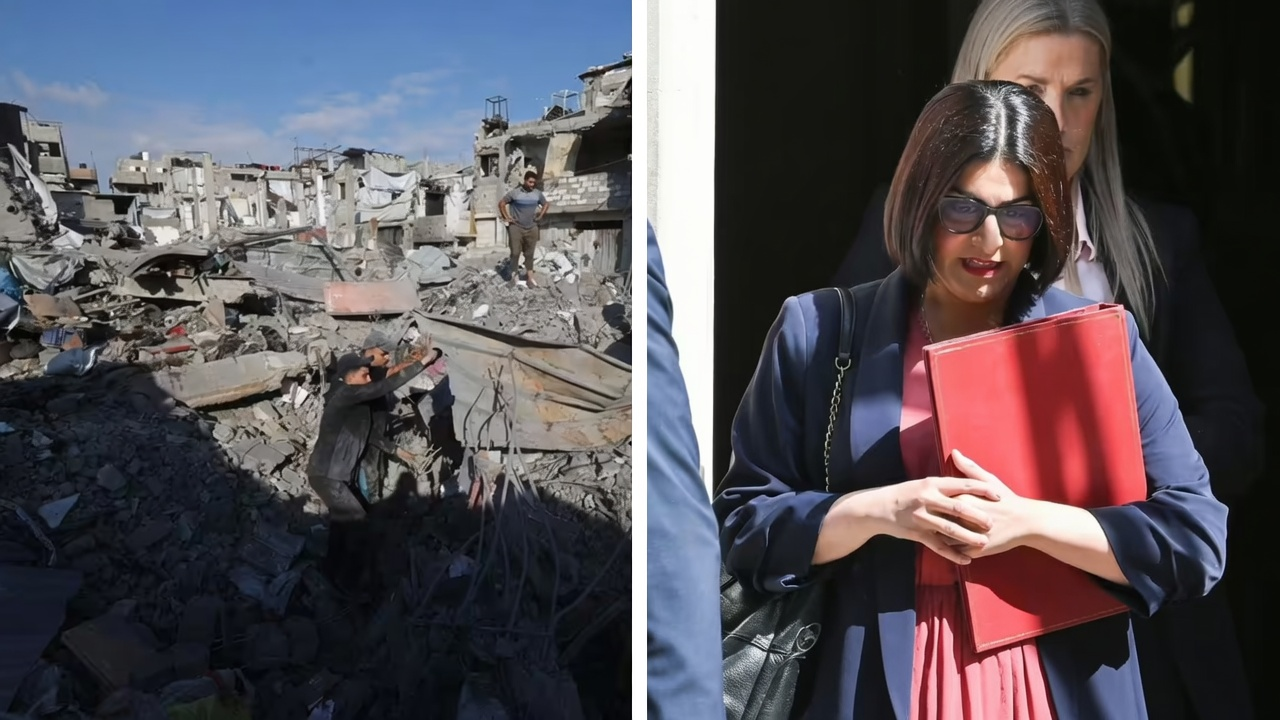
A family of 18 from Gaza has reportedly been granted permission to live in the United Kingdom following a lengthy legal battle over family reunification and human rights.
The case centres on a Gaza-born mother of three who had previously received protection in Britain. She applied for members of her extended family to join her after the conflict in Gaza placed them in increasingly dangerous and difficult circumstances.
The Home Office initially rejected the application. However, an immigration tribunal later concluded that continuing to separate the family would have consequences serious enough to outweigh the Government’s concerns about immigration control and public spending.
The ruling has since triggered an intense political debate over the limits of family reunion rules, the role of the European Convention on Human Rights and the potential financial responsibilities facing British taxpayers.
Who will be permitted to enter Britain?
According to details contained in the tribunal ruling, the group includes the woman’s parents, siblings, their spouses and their children.
Alongside the woman’s own three children, permission was granted for both of her parents to come to Britain. One of her brothers, his wife and their four children were also included, together with one sister and her four children, and another sister, her husband and their three children.
The tribunal granted anonymity to the entire family, reflecting the sensitive nature of the case and the risks that could arise from publicly identifying those involved.
Evidence presented during the proceedings suggested that most of the adult applicants had limited or no English-language ability. The ruling also indicated that the woman living in Britain could provide accommodation for her parents, although other relatives could require wider assistance after arriving.
The tribunal accepted that the UK-based woman and her children had experienced significant emotional and psychological distress because of the conditions facing their relatives in Gaza. Their anxiety was reportedly intensified by uncertainty over whether family members would remain safe and whether they would ever be reunited.
This human dimension sits at the heart of the case. Behind the legal terminology are children worrying about grandparents, siblings fearing for one another and a mother attempting to protect relatives from thousands of miles away. Whatever view people take on immigration policy, that emotional reality is difficult to dismiss.
Tribunal considered family-life rights
The successful appeal was based on the right to respect for private and family life under Article 8 of the European Convention on Human Rights.
Under ordinary UK immigration rules, refugee family reunion generally focuses on immediate relatives, particularly spouses or partners and dependent children. Extended family members do not automatically qualify and must usually demonstrate exceptional circumstances.
In this case, the tribunal concluded that the consequences of refusing entry would be exceptionally severe for the woman and her children in Britain.
Upper Tribunal Judge Gemma Loughran explained that the lower tribunal had found the impact of continued separation would be “unjustifiably harsh”. The judge determined that the family’s individual circumstances outweighed the public interest in maintaining the refusal.
The legal reasoning did not establish an automatic right for every extended family affected by conflict to settle in Britain. Instead, it involved an individual assessment of the evidence, including the family’s vulnerability, their living conditions and the effect of separation on the woman and her children.
The distinction is important. Immigration tribunal decisions are often discussed as though one judgment immediately changes the rules for everyone. In reality, human rights cases usually depend heavily on the specific facts presented to the court.
Nevertheless, the ruling could influence how lawyers approach similar applications involving people trapped in conflict zones.
Case began in 2023
The family reportedly submitted its reunification application in November 2023, shortly after the conflict in Gaza escalated dramatically.
After the Home Office rejected the request, the family challenged the decision in the lower immigration tribunal. They won their human rights appeal in April of the following year.
The Government then brought the case before the Upper Tribunal, arguing that the original judgment should not stand. That challenge was ultimately unsuccessful, leaving the earlier decision in place.
The lengthy process illustrates how immigration disputes can continue for months or even years. For families living in relatively safe circumstances, such delays can be frustrating. For those caught in an active conflict, every additional week may feel unbearable.
It also demonstrates the difficult position faced by decision-makers. Ministers are expected to maintain consistent immigration rules and protect public resources, while judges must ensure that those rules are applied in a manner compatible with Britain’s human rights obligations.
These responsibilities do not always lead to the same conclusion, which is why cases such as this can become politically explosive.
Conservatives demand Government appeal
Shadow Home Secretary Chris Philp strongly criticised the judgment, warning that it could encourage a larger number of applications from Palestinians seeking entry to the UK.
He called on the Home Secretary to challenge the outcome and argued that the case demonstrated wider problems within the immigration tribunal system.
Philp also renewed calls for Britain to leave the European Convention on Human Rights, a long-running demand among some Conservative politicians who believe international human rights law places excessive restrictions on the Government’s ability to control immigration.
Supporters of the ECHR take the opposite view. They argue that the convention provides an essential safeguard, ensuring that ministers cannot make decisions without considering the consequences for individuals and families.
This disagreement is about more than one family. It reflects a much broader political struggle over who should have the final say when immigration rules conflict with claims of exceptional hardship: elected ministers, domestic judges or a legal framework shaped partly by international obligations.
Concerns over public spending
Reform UK MP Richard Tice also criticised the outcome, claiming that the family’s arrival could result in substantial costs for taxpayers.
The lower tribunal acknowledged that members of the family were likely to require access to public funds. Their limited English skills, the number of children involved and the possibility that some adults would initially struggle to find employment were among the factors likely to influence the level of support required.
Those concerns deserve serious examination. Housing, healthcare, education and welfare services are already under pressure in many parts of the country, and the public is entitled to expect transparency about the consequences of immigration decisions.
However, the financial argument is only one part of the picture. Refugee and human rights cases also involve moral and legal questions that cannot always be reduced to a balance sheet.
A responsible debate should be capable of recognising both realities: public services have limits, but people escaping extreme danger are not simply numbers in a spending forecast.
The language used by political leaders will matter. Describing one ruling as evidence that Britain is about to face an uncontrolled influx may attract attention, but it can also create fear before the wider legal implications have been properly assessed.
Family reunion policy under pressure
Britain’s refugee family reunion policy has faced increasing scrutiny after a sharp rise in the number of visas issued to relatives of people granted protection.
Figures cited in the debate showed that the number of refugee family members receiving visas increased from approximately 4,300 in 2023 to around 20,600 in the year ending the following March.
The Government later suspended the existing family reunion route while reviewing the system.
Supporters of tighter controls say the increase demonstrates the need for clearer limits and stronger checks. They argue that a protection decision involving one person should not automatically create a pathway for a much larger extended family.
Refugee organisations and human rights campaigners respond that family reunion is one of the safest legal routes available to people affected by war. Without such routes, they warn, desperate families may turn to smugglers or attempt dangerous journeys.
Previous governments have also introduced broader arrangements for people fleeing exceptional crises. Some Ukrainian refugees, for example, were permitted to join relatives in Britain under special schemes created in response to the Russian invasion.
The challenge is deciding when an emergency is severe enough to justify departing from normal immigration rules—and whether those exceptions can be applied consistently across different conflicts.
A ruling with wider political consequences
The Gaza family’s victory is likely to remain controversial because it touches several of the most sensitive issues in British politics: immigration, human rights, public spending, international conflict and the authority of the courts.
Critics fear that the judgment could make it harder for the Government to enforce clear boundaries around family reunion. Supporters see it as evidence that the legal system can still respond compassionately when rigid rules produce exceptionally harsh outcomes.
Both concerns deserve to be heard without turning the family itself into a political symbol.
It is reasonable to ask how much the decision will cost, whether it could be cited in future cases and how the Government intends to maintain a fair and sustainable immigration system. It is equally reasonable to remember that those at the centre of the proceedings are human beings who have spent years living with fear, separation and uncertainty.
This case does not resolve Britain’s wider immigration debate. Instead, it exposes how difficult that debate has become.
The country must balance compassion with capacity, legal obligations with democratic accountability, and individual hardship with rules intended to apply to millions of people. There are no simple answers, despite the certainty often displayed in political statements.
For the family involved, however, the decision is not an abstract argument about legislation or national borders. It represents the possibility of safety, reunion and the chance to begin rebuilding lives that have been overshadowed by conflict.