Record 128 People Cross English Channel in a Single Small Boat Despite Fall in Overall Arrivals
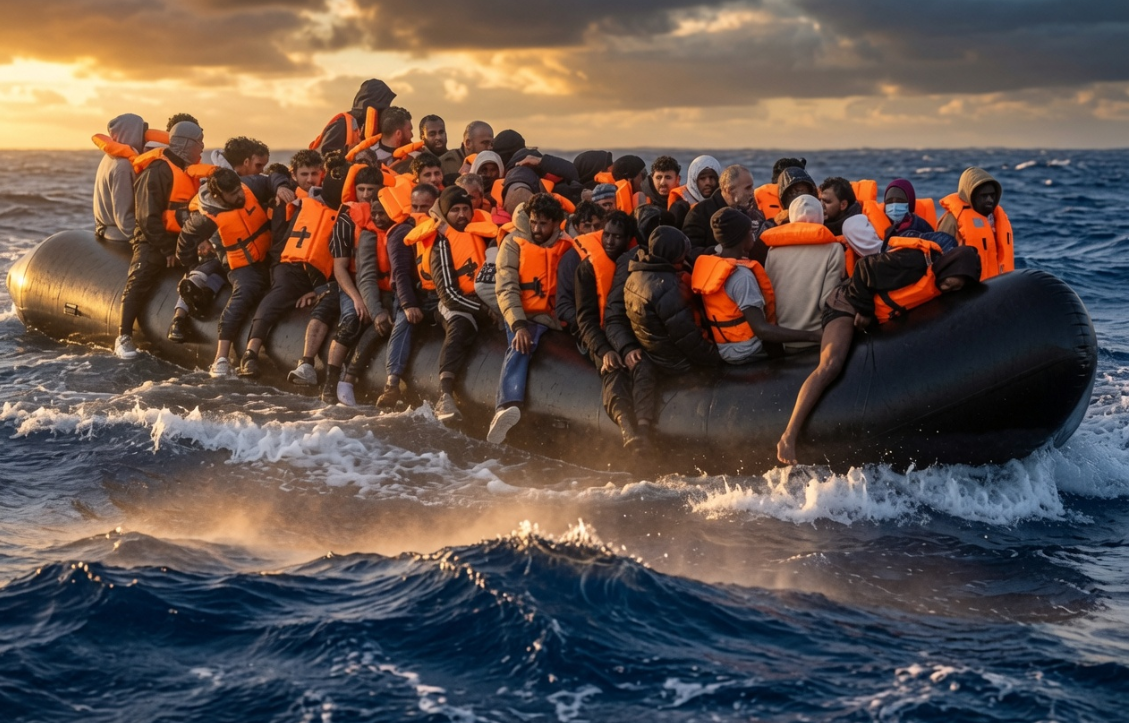
A dangerously overcrowded vessel carrying 128 people has reached the UK, setting a new record for the number of migrants arriving in a single small boat. The incident has renewed concerns that criminal smuggling networks are placing more lives at risk, even as the overall number of Channel arrivals falls sharply.
A record 128 people crossed the English Channel in one small boat on Friday, July 10, according to Home Office figures.
The vessel was one of three boats carrying a combined total of 225 people across one of the world’s busiest shipping routes that day.
The previous record was set in September 2025, when 125 people were recorded aboard a single vessel.
While political attention often focuses on the number of people reaching Britain, the latest crossing tells another troubling story: smugglers appear to be packing increasingly large groups into boats that were never designed for such journeys.
A Home Office spokesperson said the record showed that organised smuggling gangs were taking greater risks, with more people being placed aboard vessels described as unseaworthy.
Behind every statistic is a frightening physical reality. More than 100 people may be forced to sit tightly together on an inflatable craft, often with limited protective equipment and little ability to move if the boat begins taking on water.
For those on board, the Channel is not simply a line on a political map. It is cold, unpredictable and filled with commercial shipping. A mechanical failure, sudden change in weather or moment of panic can quickly become a disaster.
Overall Channel arrivals fall sharply
Despite the record number of passengers in one boat, the broader picture shows that fewer people have crossed the Channel so far this year.
Home Office data indicates that 11,884 people arrived in small boats between the beginning of January and the end of June 2026.
That represents a 41 per cent reduction compared with the 19,982 arrivals recorded during the same period in 2025. The figure is also 12 per cent lower than the 13,489 arrivals reported in the first six months of 2024.
For ministers, this decline will be presented as evidence that enforcement measures, cooperation with France and efforts to disrupt smuggling networks may be having an effect.
However, the figures require careful interpretation.
Channel crossings can rise and fall for several reasons, including weather conditions, the availability of boats and engines, enforcement activity on the French coast and changing migration routes across Europe.
A six-month decline is significant, but it does not necessarily mean the problem has been permanently resolved. Previous years have demonstrated how quickly arrival numbers can change when warmer weather and calmer seas create more opportunities for departures.
The fact that more people are now being placed into individual boats may also suggest that criminal networks are adapting to increased enforcement.
Fewer boats leaving France does not automatically mean fewer lives are being endangered if each vessel carries a much larger number of passengers.
Crowded boats create greater danger
The growing number of people placed aboard each boat is arguably one of the most disturbing aspects of the latest figures.
Smuggling operations are businesses built around desperation. Their organisers can increase profits by reducing the number of vessels they purchase while charging more passengers for places aboard the same craft.
Those decisions may make financial sense to criminals, but they create enormous risks for the people at sea.
An overcrowded boat sits lower in the water, becomes more difficult to control and may be more vulnerable to damage. Passengers can also find it harder to respond if the engine fails or the vessel begins to deflate.
Many of those making the journey may have already travelled through several countries and paid substantial sums to smugglers. Some may understand the risks but feel that turning back is no longer a realistic option. Others may not be told the true condition of the boat until they reach the beach.
This is where the public debate can sometimes lose its humanity.
Britain has every right to control its borders, prosecute smugglers and decide asylum claims through an orderly legal process. At the same time, people placed in dangerously overcrowded boats remain human beings whose lives should not become acceptable collateral damage in a political argument.
A serious immigration policy must be capable of recognising both realities.
Government points to cooperation with France
In April, Home Secretary Shabana Mahmood signed a three-year agreement under which the UK will provide £662 million to support French action against Channel crossings.
The funding is intended to strengthen beach patrols and improve authorities’ ability to detect and disrupt attempted departures from northern France.
Supporters of the agreement argue that stopping boats before they enter the water is safer and more effective than responding after passengers are already in the Channel.
The Government is also attempting to disrupt the supply of small boats, engines and other equipment used by smuggling networks.
However, British funding for enforcement in France has faced repeated scrutiny. Critics have questioned whether taxpayers are receiving sufficient results and whether smugglers are simply moving their departure points to more remote stretches of coastline.
The challenge is both geographical and operational. The northern French coast is extensive, and smugglers can change tactics rapidly. Boats may be stored inland, transported at short notice and launched from beaches that are difficult to monitor continuously.
There is also a risk that stronger enforcement encourages smugglers to become more aggressive or place even more people aboard each successful vessel.
This does not mean enforcement should be abandoned. It means success should be judged by more than the number of boats intercepted.
The number of lives saved, criminal networks dismantled, organisers prosecuted and dangerous journeys prevented must also form part of the assessment.
Ministers pursue wider asylum reforms
The Government is seeking to combine border enforcement with major changes to Britain’s asylum system.
The Immigration and Asylum Bill, introduced to Parliament on June 30, would give the Home Office new powers across asylum support, immigration appeals, refugee protection and removals.
Among the most debated proposals is a plan requiring some adults who have received taxpayer-funded asylum accommodation or financial support to contribute towards those costs once they have sufficient resources.
The Government says Britain spent approximately £4 billion on asylum accommodation and support during the previous year.
Home Office estimates put the average accommodation cost at £23.25 per person per night in dispersal housing, compared with £144 per night in hotels. Weekly subsistence payments range from £9.95 to £49.18 per person, depending on individual circumstances and the type of accommodation provided.
Ms Mahmood has argued that the cost to taxpayers remains too high, despite the Government claiming to have reduced asylum expenditure by £1 billion.
She said asylum support came with both rights and responsibilities, adding that people who later become able to contribute should be expected to repay part of the assistance they received.
For families struggling with housing costs, energy bills and stretched public services, the argument may appear reasonable. Many taxpayers will understandably ask why individuals with sufficient future income should never contribute towards publicly funded support.
However, the practical details will determine whether the policy reduces costs or merely creates another expensive administrative system.
Repayment plan attracts criticism
Refugee organisations have criticised the proposed repayment scheme, warning that it could leave recognised refugees beginning their lives in Britain with substantial debts.
The Refugee Council has described the expected contribution, which could reach approximately £10,000, as an additional financial barrier for people attempting to rebuild their lives.
Critics argue that refugees often face difficulties finding stable work, securing housing and establishing credit histories. Adding a large repayment obligation could delay integration and make it harder for families to become financially independent.
There are also questions over how much money the policy would realistically recover.
If only a relatively small proportion of former asylum seekers earn above the required threshold, administrative and collection costs could reduce the financial benefit to the taxpayer.
On the other hand, ministers believe the principle of contribution is important. They argue that the asylum system cannot retain public confidence if the Government appears unwilling to control costs or ask financially capable recipients to accept responsibility.
Both sides touch on legitimate concerns.
Taxpayers deserve transparency and value for money. Refugees who have been granted protection also need a realistic opportunity to work, integrate and build stable lives without being trapped indefinitely in poverty.
A successful system should not treat these objectives as mutually exclusive.
Temporary refugee status under consideration
The Government’s wider reforms also include proposals to make refugee protection more temporary, with an increased emphasis on reviewing whether people can safely return to their countries of origin.
Ministers believe temporary status could deter some people from making dangerous journeys and make removals easier when conditions in their home countries improve.
Supporters argue that refugee protection was designed to provide safety from danger rather than an automatic permanent route to settlement.
Human rights organisations, however, warn that repeated reviews could leave families living with uncertainty for many years. Children may grow up in Britain, attend local schools and form strong community ties while remaining unsure whether they will be allowed to stay.
That emotional uncertainty should not be dismissed as an abstract legal issue.
For a family that has fled conflict or persecution, security is more than having a roof for one night. It is the ability to plan for the next school year, accept employment, build relationships and believe that life will not suddenly be uprooted again.
The Government must therefore demonstrate that any temporary protection system will operate fairly, efficiently and in accordance with Britain’s international obligations.
A falling total does not remove the underlying crisis
The 41 per cent fall in arrivals during the first half of 2026 is politically important and should not be ignored. It may indicate that some policies are beginning to influence crossing numbers.
Yet the record of 128 people aboard one boat prevents ministers from declaring the issue solved.
It suggests that the journey is becoming more concentrated and potentially more dangerous. Smuggling networks remain active, adaptable and willing to gamble with human life.
The most effective response will require more than patrols, legislation or headline-grabbing announcements.
Britain needs faster and more accurate asylum decisions, stronger action against criminal organisers, effective returns for people with no legal right to remain and credible alternatives for those genuinely entitled to protection.
It also requires honest communication with the public.
Reducing Channel crossings is not simply about winning a political argument or producing a favourable monthly statistic. It is about preventing people from drowning, restoring control over the immigration system and ensuring that public money is spent responsibly.
Those goals are difficult, but they are not contradictory.
The image of 128 people crowded into one fragile boat should serve as a sobering reminder of what is at stake. Whatever position people take on immigration, no civilised society should become comfortable with human beings being loaded onto unsafe vessels by criminals who profit from fear, conflict and desperation.
The latest figures offer the Government a measure of encouragement, but they also deliver a warning: fewer arrivals do not necessarily mean fewer dangers.